Buying Hydrotherapy Products Online: A Sceptical Guide to What’s Worth Your Money
The online market for hydrotherapy products ranges from genuinely useful therapeutic tools backed by decades of clinical research to dubious gadgets making impossible health claims. Knowing the difference before you spend your money is the point of this guide.
This is not a product recommendation list. It is an evidence-based framework for deciding which categories of hydrotherapy product are worth buying, which ones might help but lack strong proof, and which ones you should avoid entirely.
Key Takeaways
- Warm water immersion (40–42.5°C, 1–2 hours before bed) reduces sleep onset by an average of 10 minutes (Haghayegh et al., 2019 — meta-analysis of 17 studies)
- Hot and cold packs have moderate evidence for pain relief, with hot packs most effective within 24 hours post-exercise (network meta-analysis of 59 studies, 1,367 participants)
- Aquatic exercise equipment shows strong evidence for chronic musculoskeletal conditions (32 RCTs, 2,200 participants — Shi et al., 2023)
- Products claiming to “detoxify,” “boost immunity,” or “remove toxins through your feet” have zero clinical evidence and are widely flagged by UK Trading Standards
- Running costs matter more than purchase price — an inflatable hot tub costs £40–£85 per month to heat in the UK, often exceeding the purchase price within a year
Before You Buy: Three Questions That Actually Matter
Most hydrotherapy buying guides skip straight to product recommendations. That approach is backwards. Before spending anything, you need to answer three questions honestly.
1. What specific problem are you trying to solve?
“General wellness” is not a problem statement. If you have knee osteoarthritis, the research points you toward warm water immersion or aquatic exercise. If you have post-exercise muscle soreness, basic hot and cold packs perform as well as expensive devices. If you want to sleep better, a warm bath 90 minutes before bed may be all you need — no special equipment required. Our equipment decision guide maps specific conditions to the right equipment.
2. Is there a free or cheap alternative that does the same thing?
Many hydrotherapy benefits come from warm water itself, not from expensive equipment. A standard bathtub filled with warm water at 40°C provides the same thermoregulatory sleep benefits as a £5,000 spa (Haghayegh et al., 2019). A £5 bag of ice and a £10 hot water bottle deliver comparable temperature therapy to a £200 contrast therapy device. Before buying any product, ask whether the active ingredient is the water temperature — because if it is, you probably already own what you need. Our guide to how hydrotherapy machines work explains exactly which water properties produce which effects.
3. Can you maintain and afford it long-term?
A hydrotherapy product that sits unused after three months was never worth buying. Inflatable hot tubs cost £300–£600 to buy but £40–£85 per month to run in the UK, plus £10–£20 monthly for chemicals. Over two years, a £400 inflatable hot tub will cost you £1,600–£2,920 in total. Factor in the realistic frequency of use before committing. For a detailed breakdown of seasonal running costs, see our guide to running a hydrotherapy spa year-round in the UK.
Products with Genuine Research Support
These product categories have clinical evidence from multiple studies. That does not mean every individual product in these categories is good — quality varies enormously — but the underlying therapeutic principle is supported.
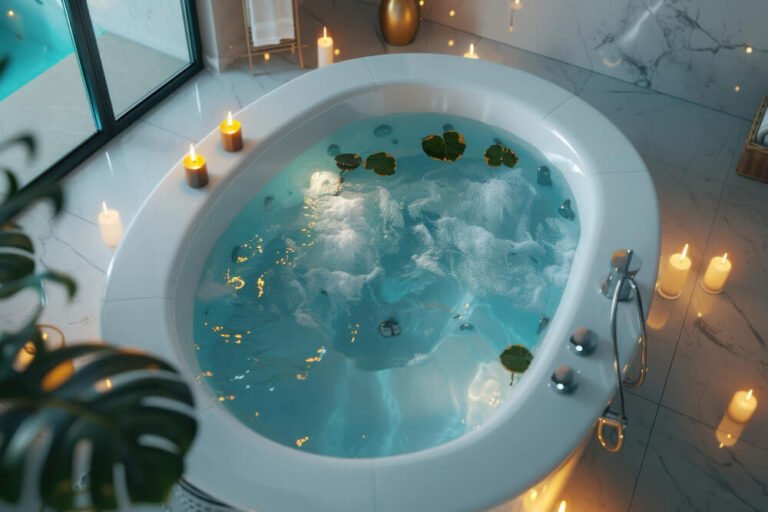
Hot tubs and warm water immersion devices
Evidence strength: Moderate to strong
Warm water immersion at 40–42.5°C has the most consistent research support of any home hydrotherapy intervention. A meta-analysis of 17 studies found that bathing 1–2 hours before bed at this temperature range shortened sleep onset by approximately 10 minutes and improved overall sleep quality (Haghayegh et al., 2019, Sleep Medicine Reviews). The mechanism is well understood: warm water dilates peripheral blood vessels, accelerating core body temperature decline, which triggers the circadian sleep signal.
For pain conditions, a 2023 systematic review of 32 RCTs with 2,200 participants found that aquatic therapy in warm water improved pain, physical function, and quality of life in chronic musculoskeletal conditions compared to no exercise (Shi et al., 2023). A separate meta-analysis of hydrotherapy for knee osteoarthritis found significant pain reduction at 1, 4, and 8 weeks (Wang et al., 2023).
What to consider: A standard bathtub provides the same water temperature benefits. Hot tubs add convenience (maintaining temperature without refilling) and jet massage, but the core benefit — warm water immersion — does not require expensive equipment. If you have a specific pain condition that benefits from longer immersion sessions, a hot tub becomes more justified.
UK price ranges:
- Inflatable hot tubs: £300–£800 purchase, £40–£85/month running costs
- Entry-level acrylic hot tubs: £3,000–£6,000 purchase, £30–£60/month running costs (better insulation)
- Mid-range acrylic hot tubs: £6,000–£12,000
- Swim spas: £15,000–£35,000+
Hot and cold packs (contrast therapy)
Evidence strength: Moderate
Simple hot and cold packs are among the most cost-effective hydrotherapy products you can buy. A network meta-analysis of 59 studies involving 1,367 patients found that within 24 hours after exercise, hot packs were the most effective intervention for pain relief, followed by contrast water therapy. Beyond 48 hours, cold therapy ranked first (Fang et al., 2021, Journal of Orthopaedic Surgery and Research).
A 2025 scoping review of contrast therapy — alternating hot and cold application — found benefits for pain reduction, joint range of motion, muscle soreness, and swelling management (Ferrara et al., 2025, Journal of Clinical Medicine). However, the authors noted that contrast therapy has surprisingly little effect on deep muscle temperature, suggesting benefits may work through neurological rather than purely thermal mechanisms.
What to consider: Reusable gel packs (£5–£15) perform the same function as elaborate contrast therapy systems costing £100–£300. The research tested basic hot and cold application, not branded devices. There is no evidence that expensive electronic temperature-cycling devices provide superior outcomes to manual hot and cold pack application.
UK price ranges:
- Reusable gel hot/cold packs: £5–£20
- Microwaveable wheat bags: £8–£15
- Ice bath tubs (inflatable): £30–£150
- Electronic contrast therapy devices: £100–£300
Aquatic exercise equipment
Evidence strength: Moderate to strong (when used properly)
Aquatic exercise — exercising in water using resistance equipment — has strong evidence for several conditions. The 2023 meta-analysis of 32 RCTs found it improved pain and function in chronic musculoskeletal conditions versus no exercise (Shi et al., 2023). A separate 2024 systematic review found aquatic exercise improved physical performance in older adults. Importantly, when compared to land-based exercise, aquatic therapy provided superior pain relief in some studies.
However, researchers have identified a critical limitation: inadequate resistance application is a major reason aquatic exercise sometimes fails to improve strength. Simply moving through water is not enough — you need proper resistance equipment and sufficient effort to benefit.
What to consider: Most aquatic exercise equipment requires access to a pool, which limits home use. The equipment itself is inexpensive, but the pool access is the expensive part. If you have pool access (public or private), basic aquatic resistance equipment offers genuine therapeutic value.
UK price ranges:
- Aqua dumbbells: £10–£30
- Aquatic resistance bands: £8–£25
- Pool noodles and flotation aids: £5–£15
- Aqua jogging belts: £15–£40
- Public pool session (where aquatic exercise happens): £3–£8 per visit
Products with Limited or Mixed Evidence
These products have a plausible mechanism but lack robust clinical trials. They might help, but the evidence is not strong enough to make confident claims.
Hydrotherapy shower heads and panels
Evidence strength: Low (plausible but unproven for specific claims)
Hydrotherapy showers use targeted water jets at varying pressures. The basic principle — water pressure applied to muscles — is related to massage therapy, which does have evidence for muscle recovery. However, there are no published RCTs specifically comparing hydrotherapy shower heads to standard showers for pain, recovery, or any other clinical outcome.
The warm water component will provide the same thermoregulatory benefits as any warm water exposure. But claims about “targeted jet therapy” or “deep tissue hydrotherapy” from a shower head are extrapolations from pool-based research, not direct evidence.
UK price ranges:
- Hydrotherapy shower heads: £30–£150
- Multi-jet shower panels: £150–£800
- Full hydrotherapy shower systems: £500–£3,000+
Foot spas and foot baths
Evidence strength: Low to moderate (for warm foot baths specifically)
There is some evidence that warm foot baths (not to be confused with “ionic detox” foot baths) can improve sleep quality. Research suggests that warm footbaths at temperatures below 40°C for at least 10 minutes over a period of one week or more can improve subjective sleep quality. The mechanism relates to the same thermoregulatory pathway as full-body immersion — warming the feet increases peripheral blood flow and aids core temperature decline.
However, a bowl of warm water achieves the same effect. The added features of commercial foot spas — vibration, rollers, bubbles — lack independent evidence of additional benefit.
UK price ranges:
- Basic foot spas: £20–£50
- Heated foot spas with massage rollers: £40–£100
- A washing-up bowl with warm water: £2
Products to Avoid: Red Flags for Scam Products
Some products marketed as “hydrotherapy” have no evidence whatsoever and are considered fraudulent by regulatory bodies. UK Trading Standards and the Advertising Standards Authority actively warn consumers about these categories.
Ionic detox foot baths
These devices claim to “draw toxins out through your feet” using an electrical current passed through water. The water changes colour during the session, which sellers present as visible evidence of toxin removal. In reality, the colour change is caused by electrode corrosion and oxidation of the metal components — it occurs whether or not your feet are in the water. Multiple independent analyses have confirmed that the water discolouration has nothing to do with body toxins.
There are no published clinical trials demonstrating that ionic foot baths remove any substance from the body. UK Trading Standards has repeatedly flagged “detox” product claims as misleading.
Magnetic water therapy devices
Products that claim to “magnetise” or “structure” water for health benefits have no scientific basis. Water cannot be magnetised in any stable or therapeutically meaningful way. The European Commission’s Scientific Committee on Health and Environmental Risks has found no evidence that magnetic water treatment provides health benefits.
Alkaline or “hydrogen-rich” bath products
Bath additives claiming to alkalise your body or infuse hydrogen into bathwater for healing rely on a fundamental misunderstanding of human physiology. Your body maintains blood pH within a narrow range (7.35–7.45) regardless of what you bathe in. No bath product can meaningfully alter your blood pH, and any that could would be medically dangerous.
How to spot misleading marketing
These red flags apply across all hydrotherapy products sold online:
- “Detoxify” or “remove toxins” — Your liver and kidneys handle detoxification. No bath, soak, or device supplements this process. Any product making this claim is either ignorant of basic physiology or deliberately misleading.
- “Boost your immune system” — The immune system is not a single switch that can be “boosted.” This phrase is prohibited in UK advertising for health products unless backed by an authorised health claim.
- “Clinically proven” without citations — Legitimate clinical evidence comes with specific study references (author, journal, year). “Clinically proven” without details usually means untested or tested in a single, unreliable study.
- Before-and-after testimonials — Individual testimonials are not evidence. UK advertising regulations require that health product claims be substantiated by robust evidence, not anecdotes.
- “NASA-developed” or “used by elite athletes” — These appeals to authority rarely come with verifiable evidence. Even when true, endorsement is not evidence of effectiveness.
- Proprietary technology names — Terms like “Bio-Ionic Resonance,” “Quantum Hydration,” or “Cellular Regeneration Technology” are marketing language, not scientific concepts.
Real Costs: What You Will Actually Spend
Online product listings typically show only the purchase price. Here is what hydrotherapy products actually cost when you include installation, running costs, maintenance, and consumables over two years.
| Product | Purchase Price | Monthly Running Cost | 2-Year Total Cost | Evidence Strength |
|---|---|---|---|---|
| Reusable hot/cold packs | £5–£20 | £0 | £5–£20 | Moderate |
| Aquatic exercise equipment (with pool access) | £30–£80 | £15–£35 (pool fees) | £390–£920 | Moderate–Strong |
| Foot spa | £20–£100 | £2–£5 (electricity) | £68–£220 | Low–Moderate |
| Hydrotherapy shower head | £30–£150 | £0 (marginal water cost) | £30–£150 | Low |
| Inflatable hot tub | £300–£800 | £50–£105 (energy + chemicals) | £1,500–£3,320 | Moderate–Strong |
| Acrylic hot tub | £3,000–£12,000 | £40–£80 | £3,960–£13,920 | Moderate–Strong |
| Cold plunge tub | £100–£500 (basic) | £0–£30 (electric models) | £100–£1,220 | Moderate |
| Ionic detox foot bath | £50–£200 | £5–£10 (salt, pads) | £170–£440 | None (scam) |
Where to Buy: Comparing Your Options
Where you buy matters as much as what you buy. Different purchasing channels carry different risks.
Manufacturer websites
Advantages: Full warranty coverage, access to genuine replacement parts, product-specific customer support, sometimes exclusive models or configurations.
Disadvantages: Usually the highest price. No independent comparison shopping. Marketing material may overstate evidence.
Best for: Major purchases (hot tubs, swim spas) where warranty and after-sales support justify the premium.
Major online retailers (Amazon, Argos, John Lewis)
Advantages: Competitive pricing, customer reviews (with caveats), easy returns under consumer protection law, price comparison across brands.
Disadvantages: Customer reviews can be manipulated. Marketplace sellers may not honour warranties. Cheap products from unknown brands may not meet UK electrical safety standards.
Best for: Low-to-mid-range products (packs, small devices, accessories) where returns are straightforward.
Secondhand marketplaces (eBay, Facebook Marketplace, Gumtree)
Advantages: Significant cost savings, especially on hot tubs where depreciation is steep.
Disadvantages: No warranty. No returns. Hygiene concerns with water-contact products. Electrical safety may be compromised on older or modified units. Inflatable hot tubs degrade quickly and are rarely worth buying secondhand.
Best for: Hard-shell hot tubs from known brands where you can inspect before purchasing. Not recommended for anything that touches skin or requires electrical safety certification.
Specialist hydrotherapy retailers
Advantages: Knowledgeable staff, curated product range, sometimes in-store demonstrations, installation services for larger items.
Disadvantages: Higher prices than online. Limited to their brand partnerships. May push high-margin products over best-value options.
Best for: Customers who need guidance choosing between options and are willing to pay a premium for expert advice and installation.
What Hydrotherapy Products Cannot Do
No hydrotherapy product can:
- Cure any disease. Hydrotherapy can help manage symptoms of certain conditions (pain, stiffness, poor sleep). It does not cure arthritis, fibromyalgia, or any other condition.
- Detoxify your body. Your liver and kidneys perform detoxification. No bath, soak, foot spa, or device supplements or replaces this function.
- Replace medical treatment. If your doctor has prescribed physiotherapy, medication, or surgery, a hot tub is not a substitute. It may complement treatment — discuss this with your healthcare provider.
- Boost your immune system. The immune system is a complex network, not a dial that can be turned up by sitting in warm water.
- Provide results that justify extreme prices. A £15,000 hot tub does not provide measurably different health outcomes from a £4,000 one. Premium pricing reflects build quality, features, and aesthetics — not superior therapeutic effects.
A Practical Buying Decision Framework
Use this framework to evaluate any hydrotherapy product before purchasing:
Step 1: Identify your specific goal. Pain relief? Better sleep? Post-exercise recovery? Rehabilitation after surgery? Each goal has different evidence-backed solutions.
Step 2: Check whether the cheapest option covers it. For sleep improvement, a warm bath costs nearly nothing. For post-exercise soreness, a £10 ice pack and hot water bottle may be sufficient. For chronic pain management, public pool sessions at £3–£8 each may outperform any home device. See our home equipment guide for an honest assessment of what you can achieve at each price point.
Step 3: Calculate the true two-year cost. Add purchase price, installation, monthly energy, chemicals, maintenance, and replacement parts. If the total surprises you, reconsider.
Step 4: Verify the claims. Search PubMed for the specific claim the product makes. If the product page says “clinically proven to reduce inflammation,” search for the study. If you cannot find it, the claim is likely unsupported. For a ranking of every product category by research quality, see our evidence ranking guide.
Step 5: Buy the least expensive option that meets your need. Upgrade only if the cheaper option proves insufficient after genuine use.
Related Reading
- How Hydrotherapy Machines Actually Work: The Physics Behind Every Claim
- Every Hydrotherapy Product Ranked by Evidence
- Hydrotherapy Equipment: An Evidence-Based Decision Framework
- Home Hydrotherapy Equipment: What Works vs Marketing Fantasy
References
- Haghayegh, S. et al. (2019). Before-bedtime passive body heating by warm shower or bath to improve sleep: A systematic review and meta-analysis. Sleep Medicine Reviews, 46, 124–135. PubMed
- Shi, Z. et al. (2023). Efficacy of aquatic exercise in chronic musculoskeletal disorders: a systematic review and meta-analysis of randomized controlled trials. Journal of Orthopaedic Surgery and Research, 18, 917. PubMed
- Wang, H. et al. (2023). The efficacy and safety of hydrotherapy in patients with knee osteoarthritis: a meta-analysis of randomized controlled trials. Clinical Rehabilitation. PubMed
- Fang, Y. et al. (2021). Effect of cold and heat therapies on pain relief in patients with delayed onset muscle soreness: A network meta-analysis. Journal of Rehabilitation Medicine, 53(11). PubMed
- Ferrara, P.E. et al. (2025). Mechanisms and Efficacy of Contrast Therapy for Musculoskeletal Painful Disease: A Scoping Review. Journal of Clinical Medicine, 14(5), 1441. PubMed
- Gholami, M. et al. (2023). Efficacy of hydrotherapy, spa therapy, and balneotherapy on sleep quality: a systematic review. International Journal of Biometeorology. PubMed
- An, J. et al. (2019). Effect of Water-Based Passive Body Heating on Sleep: A Systematic Review and Meta-Analysis. Sleep Medicine Reviews, 46, 124–135.