Hydrotherapy for Relaxation: What Each System Actually Does to Your Nervous System
Most articles about hydrotherapy and relaxation list vague benefits — “reduces stress,” “promotes wellbeing,” “rejuvenates the body.” This one is different. It examines the specific physiological mechanisms by which each full-body hydrotherapy system affects your nervous system, so you can judge for yourself which approach is worth pursuing and which claims are overblown.
Relaxation is not a mystical state. It is a measurable physiological shift: reduced cortisol, increased parasympathetic nervous system activity, lower heart rate, and decreased muscle tension. Different hydrotherapy systems trigger this shift through different pathways — and some do so more reliably than others.
Key Takeaways
- Warm water immersion at 40–42.5°C triggers parasympathetic dominance through thermoregulation — dilating peripheral blood vessels, lowering core temperature, and signalling the body to shift from alert to rest mode (Haghayegh et al., 2019)
- Finnish sauna bathing increases beta-endorphin release and may reduce cortisol in regular users, but acute sessions temporarily raise cortisol (stress response before relaxation response)
- Cold water immersion produces a significant stress reduction — but only 12 hours after exposure, not during (Esperland et al., 2025 — systematic review, 11 studies, 3,177 participants). For the full evidence on ice baths and contrast therapy, see our extreme recovery guide
- Steam rooms have limited clinical evidence for relaxation specifically — most benefits relate to respiratory symptom relief
- A standard warm bath provides the same core relaxation mechanism as systems costing thousands of pounds
How Relaxation Actually Works: The Autonomic Nervous System
Your autonomic nervous system has two branches. The sympathetic branch activates your “fight or flight” response — increasing heart rate, tensing muscles, raising cortisol. The parasympathetic branch does the opposite — slowing heart rate, relaxing muscles, lowering cortisol, and promoting digestion and recovery.
Genuine relaxation means shifting from sympathetic to parasympathetic dominance. This shift is measurable through heart rate variability (HRV), cortisol levels, and skin conductance. Any hydrotherapy system’s relaxation claim can be evaluated by asking: does it reliably shift the autonomic nervous system toward parasympathetic activity? The research gives clear answers for each system.
Warm Water Immersion: The Best-Evidenced Relaxation System
Mechanism: Thermoregulatory relaxation response
When you immerse your body in water at 40–42.5°C, a well-documented physiological chain begins. Warm water dilates peripheral blood vessels in your hands and feet (vasodilation), increasing skin blood flow. This redistributes heat from your core to your extremities, causing core body temperature to decline. This temperature drop is the same signal your body uses to initiate sleep — it triggers the suprachiasmatic nucleus in the brain to suppress cortisol production and promote melatonin release.
A meta-analysis of 17 studies confirmed that warm water immersion 1–2 hours before bed shortened sleep onset by approximately 10 minutes and improved overall sleep quality (Haghayegh et al., 2019, Sleep Medicine Reviews). A separate 2023 systematic review confirmed that hydrotherapy, spa therapy, and balneotherapy improve sleep quality through effects on serotonin, histamine, sympathetic nerve activity, and body temperature regulation (Gholami et al., 2023).
Additionally, warm water immersion activates baroreceptors — pressure sensors in blood vessel walls. Hydrostatic pressure from water pushes on your body surface, triggering baroreceptor reflexes that promote parasympathetic activity and reduce sympathetic tone. This is why you feel calm in a bath but not necessarily under a shower — immersion provides full-body pressure that a shower cannot replicate. For a detailed explanation of all four water properties that produce therapeutic effects, see our guide to the physics behind hydrotherapy machines.
Evidence quality for relaxation: Strong. Multiple systematic reviews and meta-analyses confirm the thermoregulatory and autonomic mechanisms.
Systems that deliver this:
| System | UK Price Range | Running Cost/Month | Key Feature vs Standard Bath |
|---|---|---|---|
| Standard bathtub | £0 (existing) | £5–£10 (water/heating) | Baseline — provides all core mechanisms |
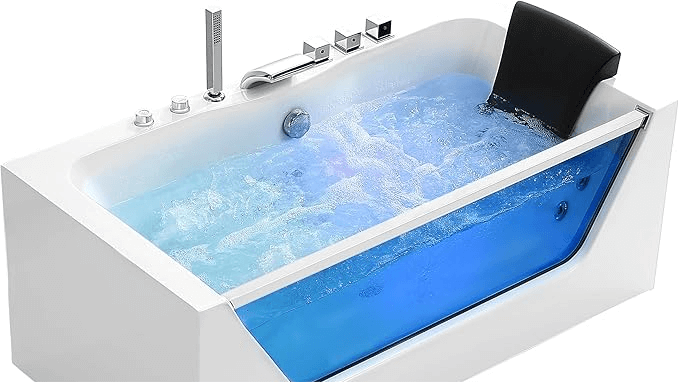
| Whirlpool bath | £500–£3,000 installed | £10–£20 | Adds jet massage (muscle relaxation) |
| Inflatable hot tub | £300–£800 | £40–£85 | Maintains temperature, outdoor use |
| Acrylic hot tub | £3,000–£12,000 | £30–£60 | Pressurised jets, better insulation |
| Swim spa | £15,000–£35,000+ | £60–£150 | Exercise + immersion in one unit |
Important note: Every system in this table produces the same core relaxation mechanism — thermoregulatory shift through warm water immersion. The price differences reflect build quality, convenience, and additional features (jets, space, aesthetics), not superior relaxation effects. A £300 inflatable hot tub produces the same core temperature decline as a £12,000 acrylic model if the water temperature is the same. For help choosing between these options, see our evidence-based equipment guide.
Saunas: Stress Then Relaxation
Mechanism: Hormetic heat stress followed by parasympathetic rebound
Saunas operate differently from warm water immersion. A traditional Finnish sauna exposes the body to dry heat at 80–100°C (far higher than bathwater temperature), triggering an acute physiological stress response: heart rate increases to 100–150 bpm, cortisol rises, and sympathetic nervous system activity spikes. This is not relaxation — it is a controlled stress exposure.
The relaxation happens afterwards. As you cool down post-sauna, the body rebounds into parasympathetic dominance — heart rate drops, muscles relax, and beta-endorphins (the body’s natural painkillers and mood enhancers) are elevated. Regular sauna users typically experience progressively greater post-session relaxation as their bodies adapt to the heat stress.
A 2024 comprehensive review of passive heat therapies found that regular Finnish sauna use is associated with reduced cardiovascular mortality and improved vascular health (Brunt et al., 2024, Temperature). A Mayo Clinic review noted that sauna bathing “is a stress reliever” and may prevent disease through its effects on overall relaxation and endorphin release (Laukkanen & Laukkanen, 2023). However, a 2024 RCT found that regular post-exercise sauna bathing did not improve heart rate variability in middle-aged adults, suggesting the autonomic benefits may be less robust than observational studies imply.
Evidence quality for relaxation: Moderate. Strong observational evidence for long-term health benefits and self-reported relaxation. Limited RCT evidence for measurable autonomic nervous system improvement.
UK cost: Home saunas range from £500 (barrel/tent saunas) to £5,000–£20,000 (custom built). Running costs: £5–£30 per session for electric saunas depending on size and electricity rates.
Who this suits: People who enjoy the ritual of heat exposure followed by cooling. Not suitable for those who find extreme heat uncomfortable — the relaxation benefit requires tolerating the acute stress phase. Contraindicated for people with uncontrolled hypertension, unstable cardiovascular disease, or during pregnancy.
Cold Water Immersion: The Counterintuitive Relaxation Tool
Mechanism: Sympathetic spike followed by delayed parasympathetic dominance
Cold water immersion (typically 10–15°C) is the opposite of warm water immersion in its immediate effects. It triggers a powerful sympathetic response: gasping, rapid heart rate increase, vasoconstriction, and a surge in noradrenaline and cortisol. During the immersion itself, you are experiencing physiological stress, not relaxation.
A 2025 systematic review and meta-analysis (11 studies, 3,177 participants) found that cold water immersion produced a significant reduction in stress markers — but only 12 hours after exposure, not immediately (Esperland et al., 2025, PLOS ONE). The review found no significant stress reduction at 1 hour, 24 hours, or 48 hours post-immersion. It also found improvements in sleep quality and quality of life, but not in mood.
A separate meta-analysis examining cardiovascular and autonomic responses found that cold exposure enhances parasympathetic nervous activity post-immersion, with significant increases in heart rate variability indices that persisted for up to 15 minutes following cold exposure.
Evidence quality for relaxation: Moderate, but with important caveats. The relaxation effect is delayed and the experience itself is acutely stressful. Not suitable for people seeking immediate calm.
UK cost: Cold plunge tubs range from £100 (inflatable) to £500 (insulated basic) to £3,000–£10,000 (electric cooling units). A cold shower or ice bath costs essentially nothing.
Who this suits: People who respond positively to acute stress followed by recovery — similar personality profile to those who enjoy intense exercise. Not suitable for those with cardiovascular conditions, Raynaud’s disease, or cold urticaria.
Steam Rooms: Limited Relaxation Evidence
Mechanism: Humid heat exposure with respiratory effects
Steam rooms operate at lower temperatures than saunas (40–50°C) but at near-100% humidity. The physiological response is similar to but milder than sauna bathing — elevated heart rate, mild cortisol increase, and peripheral vasodilation. The high humidity adds a respiratory component: steam inhalation hydrates mucosal membranes and may temporarily relax bronchial smooth muscles.
However, the evidence specifically for relaxation from steam rooms is sparse. Most published research on steam therapy focuses on respiratory outcomes (sinus symptoms, airway clearance) rather than stress reduction or autonomic nervous system changes. A 2023 clinical study found steam inhalation improved respiratory parameters in asthmatic patients, but this was a respiratory intervention, not a relaxation study.
The subjective relaxation reported by steam room users likely comes from the same general warm-environment mechanism as saunas and warm baths — heat-induced vasodilation and subsequent cooling. But without specific RCTs measuring cortisol, HRV, or other relaxation biomarkers in steam room users, the evidence base is weaker than for warm water immersion or sauna bathing.
Evidence quality for relaxation: Low. Plausible mechanism but no specific clinical trials for relaxation outcomes.
UK cost: Home steam shower enclosures: £500–£3,000. Steam generators for existing showers: £300–£1,500.
Head-to-Head Comparison: Which System Relaxes You Most?
| System | Immediate Effect | Delayed Effect | Evidence for Relaxation | Minimum Cost |
|---|---|---|---|---|
| Warm water immersion | Parasympathetic activation, muscle relaxation, vasodilation | Improved sleep quality (1–2 hours later) | Strong (3+ systematic reviews) | £0 (bathtub) |
| Finnish sauna | Sympathetic stress response (elevated HR, cortisol) | Endorphin release, parasympathetic rebound | Moderate (observational + limited RCTs) | £500 |
| Cold water immersion | Strong sympathetic response (gasping, elevated HR) | Stress reduction at 12 hours; improved sleep quality | Moderate (1 systematic review, 3,177 participants) | £0 (cold shower) |
| Steam room | Mild heat response, respiratory benefit | Unknown — not specifically studied for relaxation | Low (no specific relaxation RCTs) | £300 |
For pure relaxation — defined as immediate parasympathetic activation with minimal acute stress — warm water immersion is the clear winner. It is also the cheapest option if you already have a bathtub.
Saunas and cold plunge offer relaxation through a different route: acute stress followed by rebound. This can be deeply satisfying for people who enjoy the contrast, but the experience itself is not relaxing — the relaxation comes afterwards.
What “Full-Body Hydrotherapy Systems” Cannot Do for Relaxation
- “Detoxify” stress from your body. Stress is not a toxin that accumulates in tissues. It is a neurological and hormonal state. Warm water shifts this state through measurable physiological mechanisms — not by “flushing toxins.”
- Replace treatment for clinical anxiety or depression. Hydrotherapy may complement treatment, but a hot tub is not a substitute for therapy or medication prescribed by a mental health professional.
- Provide permanent relaxation from a single session. The effects of warm water immersion last hours, not days. Sustained benefits require regular use — similar to exercise.
- “Rejuvenate” your body at a cellular level. This marketing phrase has no scientific meaning. Water immersion relaxes muscles and shifts autonomic nervous system activity. It does not reverse ageing or regenerate cells.
- Work better because the equipment is more expensive. The thermoregulatory mechanism depends on water temperature (40–42.5°C), not on jet configuration, LED lighting, or brand name. Premium features improve comfort and convenience, not the core relaxation response.
Building a Relaxation-Focused Hydrotherapy Routine
Based on the evidence, here is a practical routine optimised for relaxation:
For sleep improvement: Warm bath or shower at 40–42.5°C, for at least 10 minutes, starting 1–2 hours before your target bedtime. This timing maximises the thermoregulatory sleep signal (Haghayegh et al., 2019). No special equipment needed. For more on passive approaches, see our guide to passive hydrotherapy for stress.
For post-exercise recovery and relaxation: Warm water immersion (bath or hot tub) for 15–20 minutes within 1–2 hours after exercise. For muscle soreness specifically, contrast therapy (alternating warm and cold) has moderate evidence — but the relaxation benefit comes primarily from the warm phase.
For general stress management: Regular warm water immersion (3–5 times per week) provides the most consistent parasympathetic activation with the lowest acute stress. If you enjoy the intensity of sauna or cold exposure, add these 1–2 times per week, understanding that the relaxation effect is delayed rather than immediate.
What to avoid: Do not use cold water immersion as a relaxation tool if you find it genuinely distressing rather than invigorating. The evidence shows benefits for people who can tolerate the acute stress phase — forcing yourself through an unpleasant experience is counterproductive for relaxation goals.
Safety Considerations
- Warm water (all systems): Water above 40°C can cause burns with prolonged exposure. Limit sessions to 20–30 minutes. Pregnant women should keep water below 38°C. People with cardiovascular conditions should consult a doctor before use.
- Saunas: Stay hydrated — you can lose 0.5–1 litre of sweat per session. Exit if you feel dizzy, nauseous, or experience chest pain. Not suitable for people with uncontrolled blood pressure.
- Cold water: Never immerse alone. The initial cold shock response (gasping, hyperventilation) can be dangerous, particularly in deep water. Build up gradually — start with cold showers before progressing to full immersion. Contraindicated for people with cardiovascular disease, Raynaud’s disease, or cold urticaria.
- Hot tub hygiene: Inadequately maintained hot tubs can harbour Pseudomonas aeruginosa (causing “hot tub folliculitis”) and Legionella bacteria. Regular chemical treatment and water testing are essential. For detailed maintenance guidance, see our guide to running a hydrotherapy spa year-round.
Related Reading
- How Hydrotherapy Machines Actually Work: The Physics Behind Every Claim
- Extreme Hydrotherapy for Recovery: Ice Baths, Contrast Therapy, and What the Evidence Says
- Passive Hydrotherapy for Stress: Floatation Tanks, Warm Baths, and What Works
- Hydrotherapy Equipment: An Evidence-Based Decision Framework
References
- Haghayegh, S. et al. (2019). Before-bedtime passive body heating by warm shower or bath to improve sleep: A systematic review and meta-analysis. Sleep Medicine Reviews, 46, 124–135. PubMed
- Gholami, M. et al. (2023). Efficacy of hydrotherapy, spa therapy, and balneotherapy on sleep quality: a systematic review. International Journal of Biometeorology. PubMed
- Esperland, D. et al. (2025). Effects of cold-water immersion on health and wellbeing: A systematic review and meta-analysis. PLOS ONE, 20(1), e0317615. PubMed
- Brunt, V.E. et al. (2024). The multifaceted benefits of passive heat therapies for extending the healthspan: A comprehensive review with a focus on Finnish sauna. Temperature, 11(1), 1–26. PMC
- Laukkanen, J.A. & Laukkanen, T. (2023). Does the Combination of Finnish Sauna Bathing and Other Lifestyle Factors Confer Additional Health Benefits? Mayo Clinic Proceedings, 98(2), 227–237. Mayo Clinic Proceedings
- Antonelli, M. & Donelli, D. (2018). Effects of balneotherapy and spa therapy on levels of cortisol as a stress biomarker: a systematic review. International Journal of Biometeorology, 62(6), 913–924. PubMed