Hydrotherapy for Seniors: Safe Water Exercises, Benefits, and Getting Started After 60
Why Water Is Ideal for Ageing Bodies
As we age, the body presents a frustrating paradox: we need exercise more than ever (to maintain bone density, muscle mass, balance, and cardiovascular health), but the conditions that come with ageing — arthritis, osteoporosis, balance disorders, joint replacements — make many land-based exercises painful or risky.
Water solves this problem. Immersed to chest level, a 75-year-old with knee arthritis bears only 20% of their body weight, can move joints through their full range without pain, and faces zero fall risk. The warm water relaxes stiff muscles, improves circulation, and provides natural resistance for strength building — all without the jarring impact of walking on pavement or lifting weights.
Evidence-Based Benefits for Older Adults
Fall Prevention
Falls are the leading cause of injury-related death in adults over 65. A 2022 meta-analysis in the Journal of Aging and Physical Activity found that aquatic exercise programs reduced fall rates by 30–40% in older adults, primarily through improved balance, lower limb strength, and proprioception (body awareness).
Arthritis Management
The Arthritis Foundation recommends warm water exercise as a first-line treatment for osteoarthritis. Buoyancy reduces joint loading by up to 80%, while warm water (33–36°C) decreases joint stiffness and pain. Regular aquatic exercise maintains range of motion and builds the muscle strength that protects ageing joints. For condition-specific protocols, see our hydrotherapy for arthritis guide.
Cardiovascular Fitness
Hydrostatic pressure improves venous return and reduces resting heart rate during immersion. This makes aquatic exercise an effective cardiovascular workout with lower cardiac strain than equivalent land-based exercise — important for seniors with controlled heart conditions.
Bone and Muscle Preservation
While water exercise doesn’t load bones as heavily as weight-bearing exercise on land, water resistance provides meaningful muscle strengthening. Studies show aquatic exercise maintains and builds lower limb muscle mass in older adults — critical for independence and mobility.
Pain Reduction
Warm water immersion activates the gate control mechanism (pressure signals override pain signals), triggers endorphin release, and reduces inflammatory markers. Many seniors report 40–60% pain reduction after 6–8 weeks of consistent aquatic exercise. More on the mechanisms in our science guide.
Mental Health and Social Connection
Group aquatic exercise classes combat social isolation — one of the biggest health risks in older adulthood. Beyond the social element, warm water immersion reduces cortisol, activates the parasympathetic nervous system, and improves sleep quality. See our guide on the mental health benefits of hydrotherapy.
8 Safe Aquatic Exercises for Seniors
These exercises are designed for adults over 60 with varying fitness levels. Perform them in chest-deep warm water (33–36°C). Always hold the pool edge or use a pool noodle for balance until you’re confident.
1. Water Walking (5 Minutes)
Walk forward across the pool, then backward, then sideways. Maintain upright posture. Swing arms naturally. Start slowly and increase pace as comfortable. This is the foundation of every senior aquatic program.
2. Standing Marching
Hold the pool edge. Lift one knee toward your chest (as high as comfortable), lower, and repeat with the other leg. 10 repetitions per leg. Builds hip flexor strength and balance — two key factors in fall prevention.
3. Leg Swings
Hold the pool edge. Swing one leg forward and backward like a pendulum, keeping it straight. 10 swings per leg. Improves hip mobility and strengthens hip stabilisers.
4. Arm Circles
Stand in shoulder-deep water. Extend arms to the sides and make slow circles — 10 forward, 10 backward. Water resistance strengthens the rotator cuff and improves shoulder mobility. Excellent for seniors with stiff shoulders or post-replacement patients.
5. Calf Raises
Hold the pool edge. Rise onto your toes, hold for 3 seconds, lower slowly. 10–15 repetitions. Builds ankle strength and calf muscle — critical for balance and preventing falls.
6. Seated Knee Extension
Sit on a pool step or ledge with water at chest level. Straighten one knee until the leg is fully extended, hold 3 seconds, lower slowly. 10 repetitions per leg. Strengthens the quadriceps — the muscle group most responsible for getting up from chairs and climbing stairs.
7. Water Bicep Curls (With Pool Noodle)
Hold a pool noodle underwater with both hands, palms up. Curl it toward your chest against the buoyancy resistance, then push it back down. 10–15 repetitions. Builds upper body strength using water’s natural resistance.
8. Gentle Trunk Rotation
Stand in shoulder-deep water with arms extended. Slowly rotate your torso left, then right, keeping hips facing forward. 10 rotations per side. Maintains spinal mobility and strengthens the obliques that support posture.
For more exercises including warm-up and cool-down routines, see our complete hydrotherapy exercises guide.
Sample Weekly Program for Beginners (Over 60)
| Week | Frequency | Session Length | Exercises | Intensity |
|---|---|---|---|---|
| 1–2 | 2× per week | 15–20 min | Water walking + 3 exercises | Light (can talk easily) |
| 3–4 | 2–3× per week | 20–25 min | Water walking + 5 exercises | Light to moderate |
| 5–6 | 3× per week | 25–30 min | All 8 exercises | Moderate (slightly breathless) |
| 7–8 | 3× per week | 30–40 min | All 8 exercises + variations | Moderate |
| Ongoing | 3–4× per week | 30–45 min | Full program with progression | Moderate to challenging |
Safety Considerations for Seniors
- Always supervise or buddy up — Never swim or exercise alone, especially if you have balance issues, seizure history, or cardiac conditions
- Enter and exit slowly — Use handrails and pool steps. Avoid jumping or diving. Wet surfaces are the primary fall hazard
- Stay hydrated — Warm water causes sweating even though you can’t feel it. Drink water before, during, and after sessions
- Monitor temperature — Seniors are more susceptible to overheating. Keep water at 33–36°C for exercise; avoid prolonged immersion above 38°C
- Watch for warning signs — Exit immediately if you feel dizzy, nauseous, short of breath, or chest pain
- Get medical clearance — If you have heart disease, uncontrolled blood pressure, diabetes, or recent surgery, consult your doctor before starting
- Medication awareness — Blood pressure medications, beta-blockers, and diuretics can affect your response to warm water immersion. Discuss with your doctor or pharmacist
For a complete list of when to avoid water therapy, see our contraindications guide.
Where to Find Senior Aquatic Programs
- Community recreation centres — Many offer “Silver Splash” or “Aqua Fit for Seniors” classes at low cost ($5–$15/session)
- YMCA/YWCA — Widely available warm water programs designed for older adults, often with sliding-scale fees
- Hospital rehabilitation departments — Clinical aquatic therapy with physiotherapist supervision for post-surgical or complex medical cases
- Arthritis Foundation programs — Aquatic Program (AFAP) classes are specifically designed for people with arthritis and taught by certified instructors
- Home setup — A home hydrotherapy setup eliminates travel barriers and allows daily access
Home Hydrotherapy Options for Seniors
If getting to a pool is difficult (transportation, mobility, distance), home options include:
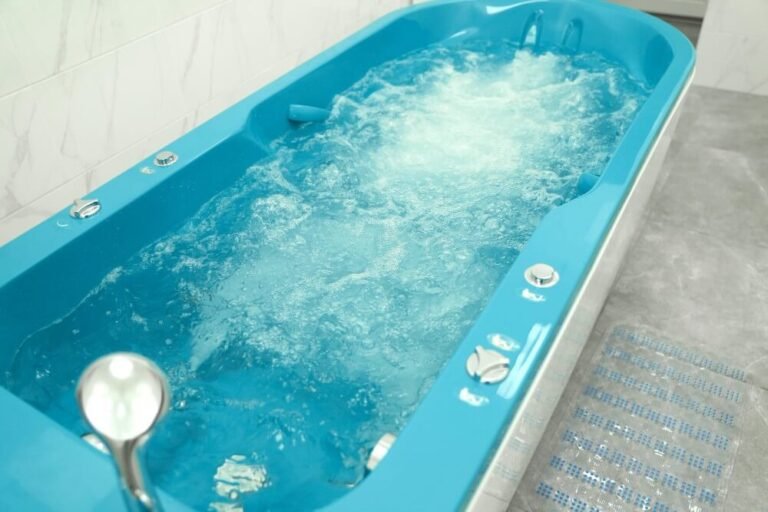
- Walk-in hydrotherapy tub — Door entry eliminates the need to climb over a tub wall. Built-in jets provide hydromassage. Look for models with grab bars and non-slip floors. See our tub guide for recommendations.
- Portable hot tub/spa — More affordable than permanent installation. Allows warm water soaking with jet massage, though too small for full exercise programs.
- Shower hydrotherapy — A handheld shower head with adjustable pressure settings directed at painful joints provides targeted warm water therapy at zero additional cost.
Frequently Asked Questions
Is hydrotherapy safe for elderly people?
Yes — aquatic exercise is one of the safest forms of physical activity for older adults because water eliminates fall risk during exercise, reduces joint loading by up to 80%, and allows controlled intensity. The main safety considerations are water temperature management (keep at 33–36°C for exercise), supervised entry/exit, and medical clearance for cardiac conditions or uncontrolled blood pressure.
How often should seniors do water exercise?
Research supports 2–3 sessions per week for significant health benefits, with each session lasting 30–45 minutes. Beginners should start with 2 sessions of 15–20 minutes and gradually increase. Consistency over weeks and months matters more than session intensity.
What is the best water exercise for seniors?
Water walking is the single best aquatic exercise for seniors because it improves cardiovascular fitness, strengthens the lower body, and trains balance — all with zero fall risk. Beyond walking, standing marching, leg swings, and calf raises form a core program that addresses the muscle groups most critical for maintaining independence.
Can hydrotherapy help with balance in the elderly?
Yes. Clinical studies show aquatic exercise programs reduce fall rates in older adults by 30–40%. Water provides a safe environment to challenge balance without fall consequences, and exercises like single-leg stands, sideways walking, and reaching movements progressively train the proprioceptive system that prevents falls on land.
Is warm water or cold water better for seniors?
Warm water (33–36°C) is better for most senior applications because it relaxes stiff muscles and joints, reduces pain, and allows comfortable exercise. Cold water therapy can be beneficial for acute inflammation but is generally less appropriate for older adults due to cardiovascular stress from the cold shock response and the risk of exacerbating Raynaud’s syndrome or circulatory conditions.
]]>