Hydrotherapy for Cerebral Palsy: Water Therapy for Movement and Function
Cerebral palsy (CP) is a group of permanent movement disorders caused by damage to the developing brain, most commonly before or during birth. It affects muscle tone, movement, coordination, and posture. Approximately 17 million people worldwide live with cerebral palsy. While the brain injury itself does not change over time, the musculoskeletal effects — spasticity, contractures, weakness, and pain — often worsen without ongoing management. Hydrotherapy is one of the most widely used and evidence-supported therapies for cerebral palsy across all age groups, from infants to adults.
Why Water Works for Cerebral Palsy
For people with cerebral palsy, gravity is often the enemy. Spastic muscles work against gravity constantly, high muscle tone makes voluntary movement exhausting, and balance on land is compromised. Water changes this dynamic in several fundamental ways.
In chest-deep warm water, buoyancy supports approximately 80% of body weight. For someone with CP, this means:
- Reduced spasticity — Warm water (33-36°C) relaxes hypertonic muscles. This is one of the most consistently reported benefits in CP research. The warmth reduces the excessive muscle firing that characterises spasticity, allowing greater range of motion and more controlled voluntary movement.
- Supported movement — Buoyancy allows people who cannot stand or walk on land to achieve upright posture, take steps, and move their limbs through ranges they cannot reach against gravity. For many children with CP, the pool is the only place where independent movement is possible.
- Improved motor control — Water slows movement down. The viscosity of water provides resistance that decelerates limb movements, giving the brain more time to process sensory feedback and plan motor responses. This is especially valuable for people with athetoid or dyskinetic CP who struggle with involuntary movements.
- Sensory input — Water provides continuous tactile and proprioceptive input across the entire body surface. This sensory stimulation helps improve body awareness and spatial orientation — both commonly impaired in cerebral palsy.
- Reduced pain — Hydrostatic pressure reduces swelling, and warm water dampens pain signals. Many people with CP experience chronic musculoskeletal pain from abnormal movement patterns, and warm water immersion provides meaningful relief.
- Cardiovascular training — People with CP often have low cardiovascular fitness because land-based exercise is so difficult. Water provides enough resistance to challenge the cardiovascular system while buoyancy makes the exercise achievable.
What the Research Shows
Hydrotherapy for cerebral palsy has a substantial evidence base, with multiple systematic reviews confirming its benefits.
A systematic review and meta-analysis published in Developmental Medicine & Child Neurology examined the effects of aquatic therapy on gross motor function in children with cerebral palsy. The review found that aquatic therapy produced significant improvements in gross motor function, particularly in domains related to standing, walking, and transfers. Children who received aquatic therapy in addition to land-based therapy showed greater improvements than those receiving land-based therapy alone [1].
A Cochrane-style review of aquatic interventions for cerebral palsy found moderate-quality evidence supporting improvements in spasticity, range of motion, and functional mobility. The reviewers noted that the warm water environment was particularly effective for reducing muscle tone in the short term, with effects lasting several hours after each session [2].
A 2014 review in the North American Journal of Medical Sciences confirmed that hydrotherapy positively affects the musculoskeletal and nervous systems, with documented effects on muscle tone, pain perception, and circulation that are directly relevant to cerebral palsy management [3].
Research using the Gross Motor Function Measure (GMFM) — the standard assessment tool for CP — has shown that children who participate in structured aquatic therapy programmes demonstrate improvements in motor function scores, particularly in the areas of sitting, standing, and walking. These improvements are often larger than those achieved with land-based therapy alone, particularly for children with GMFCS levels III-V (moderate to severe motor impairment).
Hydrotherapy Exercises for Cerebral Palsy
Exercise selection depends heavily on the individual’s GMFCS level, type of CP, and therapy goals. The exercises below cover a range of abilities. Always work with a qualified aquatic physiotherapist who understands cerebral palsy.
Warm-Up and Relaxation (10 minutes)
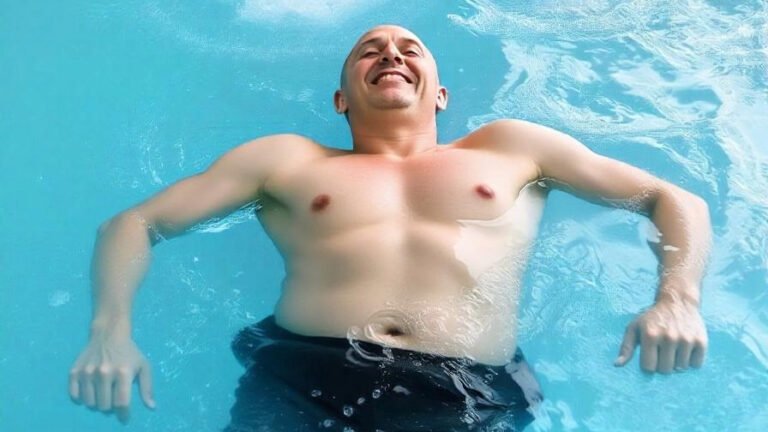
- Supported floating — Float the person on their back with full support (therapist, noodles, or floatation devices). Warm water immersion reduces muscle tone within minutes. Allow time for the spasticity to decrease before starting active exercises. 3-5 minutes.
- Gentle passive stretching — While the person is floating and relaxed, gently stretch tight muscle groups — hip flexors, adductors, hamstrings, plantar flexors. The reduced muscle tone in warm water allows stretches that are impossible on land. Hold each stretch 20-30 seconds.
- Slow swaying — Support the person in the water and gently sway them side to side. This vestibular input is calming and further promotes muscle relaxation.
Gross Motor Function
- Supported standing — For children who cannot stand independently on land, chest-deep water may allow standing with minimal support. Start with therapist or rail support. Progress toward independent standing in water. Even brief periods of upright weight-bearing in water are valuable for bone density, hip development, and postural awareness.
- Water walking — For ambulatory individuals (GMFCS I-III), walking in waist- to chest-deep water provides gait training with reduced demands. Focus on heel strike, step length, and arm swing. Water resistance naturally slows the gait cycle, allowing more controlled movement. 5-10 minutes.
- Step-ups on pool steps — Step up and down on the pool steps. Buoyancy assists the lifting phase, making this achievable for many children who cannot do step-ups on land. 10 repetitions each leg.
- Sit-to-stand transitions — Sit on the pool steps, then stand. The buoyancy assists the transition, allowing practice of this critical functional movement. 10 repetitions.
Upper Limb Function
- Reaching activities — Place floating toys at varying distances and heights. Reaching for and grasping objects in water is easier than on land because the arm is buoyancy-supported. This is especially beneficial for children with hemiplegic CP — the affected arm can move more freely in water.
- Water pouring and scooping — Use cups and containers in the water. Pouring water between cups trains grasp, release, hand-eye coordination, and bilateral coordination. The water provides natural sensory feedback about movement accuracy.
- Arm sweeps against resistance — Sweep arms through the water in various directions. Water resistance strengthens the upper limb muscles while the slow movement allows better motor control. Use paddles or webbed gloves to increase resistance as strength improves.
Core and Trunk Control
- Seated balance on noodle — Sit on a pool noodle (like riding a horse) in deep water. Maintaining balance challenges the trunk muscles. Start with therapist support and progress toward independent sitting balance. This is excellent for children working on sitting function (GMFM dimension B).
- Ring-around activities — Hold hands in a circle (with therapist or other children) and move in a circle. The person must maintain upright posture while being pulled in different directions. Combines social interaction with core stability training.
- Ball activities — Throwing, catching, or pushing a ball in the water challenges trunk stability because each arm movement creates a rotational force that the core must counteract. Progress from large, light balls to smaller, heavier balls.
Respiratory Training
- Blowing activities — Blow bubbles, blow a ping-pong ball across the water surface, or blow through a straw into the water. These activities strengthen the respiratory muscles (often weak in CP) and train breath control. Start simple and progress to more sustained blowing.
- Submersion and breath-holding — For those who are comfortable, brief face immersion and breath-holding train respiratory control and oral motor function. Always progress very gradually and never force submersion.
Cool-Down (5 minutes)
- Supported floating — Return to the initial floating position. Allow muscles to relax completely in the warm water. 3-5 minutes.
- Gentle passive range of motion — While the person is relaxed and floating, take all major joints through their full comfortable range. This helps maintain flexibility gains achieved during the session.
CP Types and Water Therapy Approaches
Spastic Cerebral Palsy
The most common type (70-80% of cases). Warm water is particularly effective here because heat directly reduces spasticity. The therapy focus is on stretching spastic muscles, strengthening weak antagonist muscles, and practising functional movements in the reduced-tone state that warm water creates. The window of reduced spasticity during and after pool sessions (often 2-4 hours) is a valuable therapy opportunity.
Dyskinetic (Athetoid) Cerebral Palsy
Characterised by involuntary, uncontrolled movements. Water viscosity naturally slows and dampens these movements, providing better motor control. The focus is on slow, controlled movements against water resistance, midline orientation, and functional task practice in the stabilised environment water provides.
Ataxic Cerebral Palsy
Characterised by poor balance and coordination. Water provides a safe environment for balance training because falls are cushioned by buoyancy. The focus is on standing balance challenges, walking with directional changes, and reaching activities that require coordination. The proprioceptive input from water pressure also helps improve body awareness.
Mixed Types
Many people have a combination of spasticity, dyskinesia, and ataxia. Aquatic therapy can address multiple components simultaneously — warm water reduces spasticity, viscosity controls involuntary movements, and buoyancy provides a safe balance-training environment.
Home-Based Water Therapy for Cerebral Palsy
- Warm baths with gentle stretching — A warm bath (37-39°C) reduces spasticity within minutes. While the person is in the bath, gently stretch tight muscles — hip flexors, adductors, hamstrings, and calf muscles. This is particularly effective as part of a nighttime routine, as the reduced muscle tone can improve comfort and sleep quality.
- Community pool sessions — Regular visits to a warm community pool (2-3 times per week) provide ongoing therapy opportunities. Even unstructured water play is therapeutic for children with CP because every movement in water involves resistance, balance challenge, and sensory input.
- Home hydrotherapy equipment — Inflatable pools or swim spas can bring aquatic therapy home. For families managing CP, the convenience of a home setup can dramatically increase the frequency and consistency of water therapy.
- Contrast therapy for pain — For adults with CP experiencing chronic musculoskeletal pain, alternating warm and cool applications to painful areas can reduce inflammation and provide pain relief between pool sessions.
When to Avoid Hydrotherapy for Cerebral Palsy
- Uncontrolled seizures — Many people with CP also have epilepsy. If seizures are not well-controlled with medication, pool therapy requires very close one-on-one supervision and may not be safe in all settings. Discuss seizure management with your neurologist before starting aquatic therapy.
- Open wounds or skin infections — Wait until fully healed before pool immersion.
- Active respiratory infection — Children with CP often have compromised respiratory function. Active chest infections should be treated before returning to the pool.
- Shunted hydrocephalus — Some people with CP have VP shunts. While pool therapy is generally safe with a shunt, consult the neurosurgeon to confirm there are no specific restrictions.
- Severe thermoregulation issues — Some individuals with severe CP have difficulty regulating body temperature. Monitor closely for signs of overheating in warm water, and limit session duration if thermoregulation is a concern.
Frequently Asked Questions
At what age can children with cerebral palsy start hydrotherapy?
Aquatic therapy can begin as early as infancy — structured baby swimming and aquatic therapy programmes for infants with CP typically start from 4-6 months of age, once the baby has adequate head control and any medical issues are stable. Early aquatic intervention provides sensory stimulation, promotes motor development, and familiarises the child with water in a positive way. Many paediatric physiotherapists consider early aquatic therapy one of the most valuable interventions for young children with CP.
How often should someone with cerebral palsy do hydrotherapy?
Research protocols typically use 2-3 sessions per week for 8-12 weeks to achieve measurable improvements in motor function. Each session lasts 30-45 minutes in warm water. Consistency is crucial — the temporary spasticity reduction from each session creates a window for practising functional movements. Many families maintain 1-2 weekly sessions long-term as part of an ongoing therapy programme.
Does hydrotherapy cure cerebral palsy?
No. Cerebral palsy results from permanent brain injury — no therapy can reverse the underlying brain damage. However, hydrotherapy produces measurable improvements in muscle tone, range of motion, gross motor function, pain, and quality of life. It helps people with CP achieve their maximum functional potential and manage the secondary musculoskeletal complications that develop over time. It is one of the most effective tools in the CP management toolkit.
Can people with severe cerebral palsy benefit from hydrotherapy?
Yes. Even individuals with GMFCS level V (most severe motor impairment) benefit from aquatic therapy. The benefits include spasticity reduction, improved comfort, pain relief, range of motion maintenance, respiratory training, and sensory stimulation. For people who have very limited voluntary movement on land, water can enable movements that are otherwise impossible. The psychological and emotional benefits — enjoyment, social participation, independence in water — are also significant.
Related Reading
- 12 Hydrotherapy Exercises for Pain Relief and Recovery
- Hydrotherapy for Elderly Fall Prevention
- Warm Water Therapy for Muscle Pain
- Hydrotherapy for Health Conditions A-Z
Always work with a qualified paediatric or neurological physiotherapist experienced in cerebral palsy when designing an aquatic therapy programme. See our Medical Disclaimer.
Sources
[1] Lai, C.J., et al. (2015). Aquatic therapy for children with cerebral palsy: A systematic review and meta-analysis. Developmental Medicine & Child Neurology, 57(5), 473-480.
[2] Gorter, J.W., & Currie, S.J. (2011). Aquatic exercise programs for children and adolescents with cerebral palsy: What do we know and where do we go? International Journal of Pediatrics, 2011, 712165.
[3] Mooventhan, A., & Nivethitha, L. (2014). Scientific Evidence-Based Effects of Hydrotherapy on Various Systems of the Body. North American Journal of Medical Sciences, 6(5), 199-209.