Hydrotherapy for TMJ and Jaw Pain: Water-Based Relief for Temporomandibular Disorders
Temporomandibular joint disorders (TMJ/TMD) cause jaw pain, clicking, headaches, earaches, and difficulty chewing — affecting up to 12% of the population at any given time. While TMJ is not a condition most people associate with hydrotherapy, warm water therapy addresses the core drivers of TMJ pain: muscle tension, stress-related clenching, poor posture, and systemic inflammation.
Because TMJ dysfunction is closely linked to neck tension, shoulder tightness, and overall stress levels, a whole-body hydrotherapy approach often provides more lasting relief than jaw-focused treatments alone.
The Connection Between Water Therapy and Jaw Pain
Muscle Relaxation
The masseter and temporalis muscles — the primary jaw closers — are among the strongest muscles in the body relative to their size. In TMJ disorders, these muscles are chronically hypertonic (over-tensed), often from stress-related clenching and grinding. Warm water immersion (36-38°C) triggers a systemic muscle relaxation response that directly reduces jaw muscle tension, even without jaw-specific exercises.
Cervical Spine and Posture Correction
Forward head posture — common in desk workers — shifts the jaw position and increases TMJ loading. Neck and upper back hydrotherapy exercises improve cervical alignment, which directly reduces jaw joint strain. Buoyancy supports the head’s weight, allowing the cervical muscles to release tension that contributes to TMJ symptoms.
Stress Reduction
Stress is the number one aggravating factor for TMJ disorders. Warm water immersion is one of the most effective non-pharmaceutical stress interventions, lowering cortisol levels and activating parasympathetic nervous system dominance. For many TMJ sufferers, managing stress through regular hydrotherapy reduces clenching and grinding frequency more effectively than oral appliances alone. See our guide on hydrotherapy for anxiety for more on water-based stress management.
Hydrotherapy Techniques for TMJ Relief
Warm Water Immersion
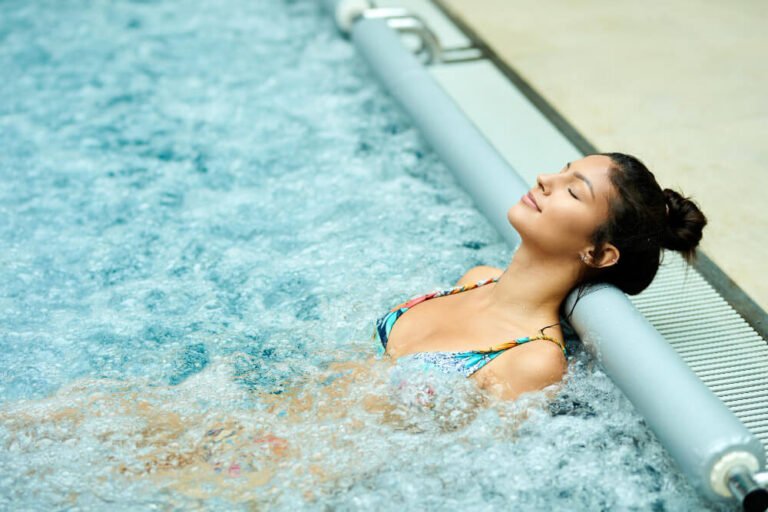
The simplest and most immediately effective technique. Submerge up to your neck in warm water (37-38°C) for 15-20 minutes. Focus on releasing your jaw — let your lips part, teeth separate, and tongue rest on the floor of your mouth. The systemic relaxation response will reduce jaw muscle tension within minutes. For enhanced benefit, combine with slow diaphragmatic breathing.
Targeted Warm Compress
Soak a flannel in warm water (40-42°C) and apply to both sides of the jaw for 10-15 minutes. The localised heat increases blood flow to the TMJ area, reduces muscle spasm, and improves jaw mobility. Do this before meals if chewing is painful, or before bed if nighttime clenching is an issue.
Contrast Therapy for Acute TMJ Flare-Ups
During an acute flare-up with inflammation and swelling, alternate warm and cold compresses on the jaw: 3 minutes warm, 1 minute cold, repeated 3-4 times. This “vascular pumping” reduces inflammation while maintaining muscle relaxation. Always end on warm for chronic TMJ; end on cold for acute inflammatory episodes.
Neck and Shoulder Aquatic Exercises
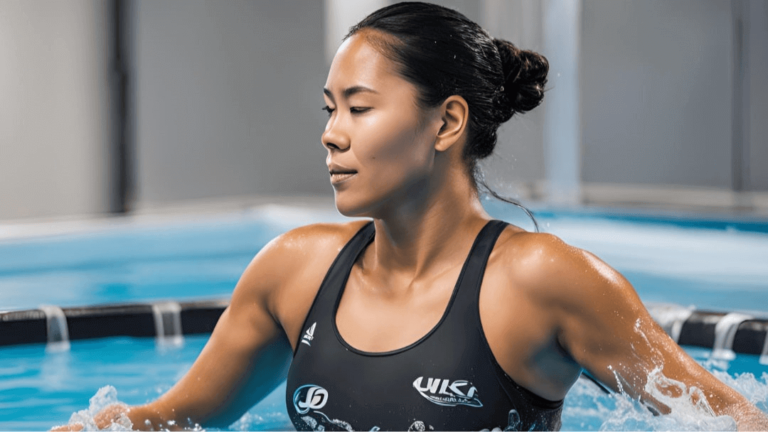
In a pool or hot tub, perform these exercises to address the postural and muscular components of TMJ:
- Neck rotations — Slowly turn your head side to side, using water resistance for gentle stretching
- Chin tucks — Draw your chin back (creating a “double chin”) to correct forward head posture. Water resistance makes this more effective than on land.
- Shoulder shrugs and rolls — Release upper trapezius tension that refers pain to the jaw
- Chest opening stretches — Stand in the pool corner, arms on the walls, and gently lean forward to open the pectoral muscles and reverse rounded-shoulder posture
- Upper back extensions — Gentle backward bending supported by water to improve thoracic posture
Jaw-Specific Water Exercises
While submerged to the neck in warm water (for maximum muscle relaxation), perform these jaw mobilisation exercises:
- Controlled mouth opening — Slowly open your mouth to comfortable maximum, hold 5 seconds, close. Repeat 10 times.
- Lateral jaw movements — Shift your jaw gently from side to side, 10 repetitions each direction
- Protrusion/retrusion — Slide the jaw forward and backward slowly, 10 repetitions
- Resisted opening — Place your fist under your chin and gently open your mouth against light resistance to strengthen the jaw openers
- Tongue-to-palate opening — Press your tongue against the roof of your mouth and open slowly — this trains correct jaw mechanics
Building a Daily TMJ Hydrotherapy Routine
- Morning: Warm flannel compress on jaw for 10 minutes while doing jaw mobilisation exercises (before breakfast)
- During the day: Hourly “jaw check” — notice if you’re clenching, relax, and separate teeth
- Evening: 15-20 minute warm bath or hot tub soak with neck exercises and jaw relaxation. This is especially important before bed to reduce nighttime clenching.
- 2-3x weekly: Pool session with neck, shoulder, and posture exercises (30 minutes)
Frequently Asked Questions
Can a hot tub help with TMJ pain?
Yes, regular hot tub use is one of the most accessible and effective hydrotherapy approaches for TMJ. The combination of warm water immersion (which relaxes all muscles including the jaw), stress reduction (the primary TMJ trigger), and the ability to target neck and shoulder muscles with jets makes a hot tub a valuable daily management tool. Many TMJ sufferers report significant improvement with nightly 15-20 minute soaks.
Should I use heat or ice for TMJ pain?
For chronic TMJ with muscle tension (the most common type), heat is generally more effective because it relaxes the hypertonic jaw muscles. Use warm water or compresses at 37-40°C. For acute TMJ flare-ups with visible swelling in front of the ear, start with ice for 48 hours, then transition to contrast therapy (alternating warm and cold). If unsure, contrast therapy is a safe middle ground that provides both anti-inflammatory and muscle relaxation benefits.
Why does my TMJ get worse with stress?
Stress activates the sympathetic nervous system, which increases muscle tension throughout the body — particularly in the jaw, neck, and shoulders. Many people unconsciously clench their jaw or grind their teeth (bruxism) when stressed, both during the day and at night. This sustained clenching overloads the TMJ and its surrounding muscles. Regular hydrotherapy interrupts this cycle by shifting the nervous system into parasympathetic (“rest and digest”) mode, directly reducing the clenching reflex.
Related Reading
- Full-Body Hydrotherapy Systems for Relaxation
- Warm Water Therapy for Muscle Pain
- How Hydrotherapy Machines Work: The Physics Behind the Relief
- Choosing the Right Hydrotherapy Equipment
TMJ disorders can have multiple causes. Consult a dentist, physiotherapist, or TMJ specialist for a thorough assessment. See our Medical Disclaimer.