
The Ultimate Guide to Hydrotherapy Tubs: What Actually Works (and What’s Overhyped)
If you have been looking into hydrotherapy for pain relief, recovery, or just plain relaxation, you have probably noticed something frustrating: every tub manufacturer claims their product will change your life. Whirlpool brands promise spa-level therapy. Walk-in tub ads make it sound like you will be running marathons after a week. And those inflatable hot tubs on Amazon? Apparently they cure everything too.
Here is the reality. Water therapy genuinely works — there is solid research behind it — but the type of tub you need depends entirely on what you are trying to accomplish, how much space you have, and what you can realistically afford. This guide cuts through the marketing noise and gives you a straight answer on what is worth your money.
Key Takeaways
- Warm water immersion (between 92-100 °F) has well-documented benefits for pain relief, circulation, and joint mobility, backed by peer-reviewed research [1][2].
- Jetted whirlpool tubs offer the most targeted therapeutic pressure but cost $2,000-$8,000+ installed.
- Walk-in tubs are the safest option for seniors and anyone with mobility challenges, though fill times are a real drawback.
- Inflatable portable hot tubs are a legitimate budget entry point ($300-$800), but they lack the jet power of permanent installations.
- Cold plunge tubs and contrast therapy setups are gaining traction for athletic recovery, and the science supports them.
- The “best” tub does not exist — the right one depends on your specific needs, body, and budget.
Why Water Therapy Actually Works (The Short Version)
Before we get into specific tubs, it helps to understand why sitting in water does anything at all. It is not just about “relaxation” — there are measurable physiological changes happening.
When you immerse your body in warm water, a few things happen simultaneously. Hydrostatic pressure — the gentle squeeze of water against your skin — helps push blood back toward your heart, improving circulation. Buoyancy takes roughly 90% of your body weight off your joints, which is why people with arthritis or back pain often feel immediate relief in water. And warmth itself dilates blood vessels, increases blood flow to damaged tissues, and reduces muscle spasm.
A comprehensive 2014 review in the North American Journal of Medical Sciences examined the clinical evidence across multiple body systems and confirmed that hydrotherapy produces measurable improvements in musculoskeletal pain, circulation, and immune function [1]. This was not one small study — it was a review of the existing body of research.
For joint conditions specifically, Tomas-Carus and colleagues published a 2017 study showing that older women with knee osteoarthritis who did hydrotherapy experienced significant improvements in both pain scores and physical function compared to a control group [2]. The Arthritis Foundation recommends warm water between 92-100 °F as the therapeutic sweet spot for arthritis symptom relief [3].
So the mechanism is real. The question is which tub delivers it best for your situation.
The Six Tub Types, Honestly Compared
1. Standard Soaking Tubs
What they are: A regular deep bathtub — no jets, no motors, just a tub that holds enough water to submerge most of your body.
The honest take: Do not underestimate a good soak. If your main goal is joint pain relief through warm water immersion, a deep soaking tub gets you about 70% of the benefit of fancier options at a fraction of the cost. The buoyancy and warmth are doing most of the therapeutic heavy lifting anyway. Japanese soaking tubs (ofuro style) are deeper than Western tubs and allow full shoulder immersion, which matters if you want upper body relief too.
Where they fall short: No targeted pressure on specific muscle groups. You are relying entirely on heat and buoyancy, with no mechanical massage effect. For someone with chronic back pain who needs focused pressure on the lumbar area, a soaking tub alone probably is not enough.
Typical cost: $200-$2,000 (tub only, not counting installation)
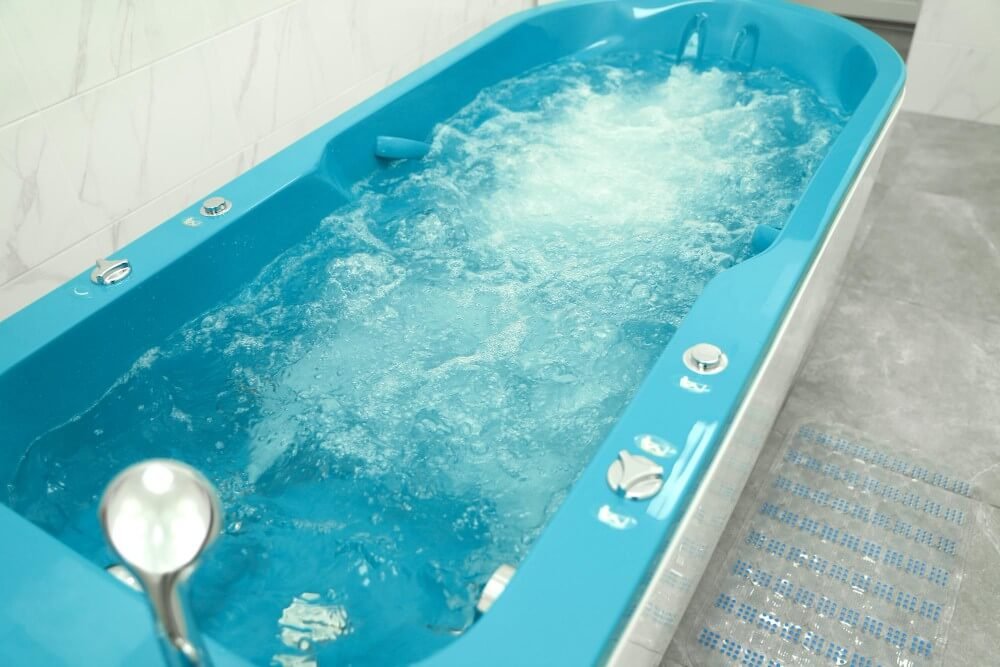
2. Whirlpool / Jetted Tubs
What they are: Tubs with built-in water jets (whirlpool) or air jets (air tubs) that provide pressurized massage. Some models combine both.
The honest take: This is where you get the closest thing to professional hydrotherapy at home. Water jets deliver targeted pressure that can genuinely work on trigger points and tight muscle groups. If you have specific problem areas — a stiff lower back, tight shoulders, plantar fasciitis — being able to aim a jet at that spot makes a real difference compared to passive soaking.
That said, there is a meaningful distinction between water jets and air jets. Water jets are more powerful and more targeted. Air jets produce a gentler, more diffused bubbling sensation — nice for relaxation, less effective for deep tissue work. Combination tubs give you both, but they also cost more and have more components that can break.
Where they fall short: Maintenance. Jetted tubs require regular cleaning because the jet lines can harbor bacteria and biofilm if you do not flush them. You will want to read up on proper cleaning and maintenance before buying. Noise is also a factor — the pump is not silent, and if your bathroom shares a wall with a bedroom, that matters.
Typical cost: $1,000-$5,000 (tub only); $2,000-$8,000+ installed
3. Walk-In Tubs
What they are: Tubs with a watertight door on the side so you can step in at floor level rather than climbing over a high rim. Designed for seniors, people with mobility limitations, or anyone recovering from surgery.
The honest take: For the right person, a walk-in tub is a game-changer. If getting in and out of a standard tub is genuinely difficult or dangerous, this solves a real safety problem. Many models include grab bars, built-in seating, anti-slip flooring, and therapeutic jets. Some have heated seats so you are not sitting on cold acrylic while the tub fills. Especially useful for people who also benefit from fall prevention strategies.
Where they fall short: You have to stand inside the tub with the door closed while it fills (5-10 minutes), then wait again to drain before you can exit. For someone with severe pain or limited standing tolerance, that wait is uncomfortable. Also, the aggressive sales tactics from walk-in tub companies are notorious. Get multiple quotes and do not let anyone pressure you into a same-day purchase.
Typical cost: $2,000-$8,000 (tub only); $3,000-$10,000+ installed
4. Inflatable Portable Hot Tubs
What they are: Blow-up hot tubs (usually round, fitting 2-6 people) with an attached heating and filtration unit. Brands like Intex, Coleman, and Bestway dominate this category.
The honest take: These get dismissed as toys, but for affordable home hydrotherapy, they are actually a reasonable starting point. They heat water to 104 °F, provide air bubble massage, and give you full-body immersion outdoors or in a garage. If you are not sure whether you will commit to regular water therapy, spending $400 on an inflatable before investing $5,000 in a permanent tub is just smart.
Where they fall short: Air bubbles only — no targeted water jet pressure. Heating is slow (24+ hours from cold). Most last 2-3 seasons with good care, not a decade. They insulate poorly in cold weather, meaning the heater runs constantly and your electric bill climbs.
Typical cost: $300-$800
5. Cold Plunge Tubs
What they are: Purpose-built tubs designed to hold water at 38-60 °F for cold water immersion therapy.
The honest take: The cold plunge trend is everywhere right now, and unlike a lot of wellness fads, this one has decent research behind it. Cold immersion reduces inflammation, decreases muscle soreness after exercise, and may support immune function. If you are an athlete or someone dealing with chronic inflammation, a cold plunge setup is worth serious consideration. Also increasingly used for stress management due to the norepinephrine response.
Dedicated cold plunge tubs with built-in chillers (like the Cold Stoic, Plunge, or Ice Barrel) maintain a consistent temperature without you having to dump ice in every time. That consistency matters — if it is a hassle, you will not do it regularly.
Where they fall short: Cold therapy is not appropriate for everyone — people with Raynaud’s, cardiovascular conditions, or cold sensitivity should consult a doctor first. High-end models with chillers run $3,000-$7,000+. A chest freezer conversion gets you there for $200-$500 if you are handy.
Typical cost: $200-$500 (DIY/chest freezer); $1,500-$7,000+ (dedicated cold plunge with chiller)
6. Contrast Therapy Setups (Hot + Cold)
What they are: A combination of hot and cold immersion, alternating between the two. Typically 3-4 minutes warm, 1 minute cold, repeated for several cycles.
The honest take: Contrast therapy is what a lot of physical therapy clinics use, and there is good reason for it. The alternation between vasodilation (warm) and vasoconstriction (cold) creates a pumping effect that can accelerate recovery and reduce swelling. The 2014 Mooventhan and Nivethitha review noted evidence supporting contrast water therapy for exercise recovery and circulatory improvement [1]. Particularly effective for sports injury recovery and ankle sprain rehabilitation.
At home, this can be as simple as a hot tub paired with a cold plunge tub, or even a warm bath followed by a cold shower. The dedicated two-tub setup is obviously more effective, but it requires space and budget for both.
Where they fall short: You need two tubs (or a tub and a cold shower). Space is the primary constraint and cost doubles. The cold portion is not comfortable — it works precisely because it is uncomfortable, so compliance can be an issue.
Typical cost: $1,500-$12,000+ (depending on whether you are combining two dedicated tubs or using simpler alternatives)
Side-by-Side Comparison
| Type | Price Range | Best For | Pros | Cons |
|---|---|---|---|---|
| Standard Soaking Tub | $200-$2,000 | General relaxation, mild joint pain | Affordable, low maintenance, no mechanical parts to break | No targeted massage, limited therapeutic pressure |
| Whirlpool / Jetted Tub | $2,000-$8,000+ (installed) | Targeted muscle pain, chronic back/neck issues | Focused jet pressure, closest to clinical hydrotherapy | Requires regular jet line cleaning, pump noise, higher cost |
| Walk-In Tub | $3,000-$10,000+ (installed) | Seniors, mobility limitations, post-surgery recovery | Safe entry/exit, built-in safety features, therapeutic jets available | Long fill/drain time, expensive, aggressive sales industry |
| Inflatable Portable Hot Tub | $300-$800 | Budget entry point, renters, testing the waters | Affordable, portable, no installation needed | Air bubbles only (no water jets), slow heating, 2-3 season lifespan |
| Cold Plunge Tub | $200-$7,000+ | Athletes, inflammation, post-workout recovery | Reduces inflammation, supports recovery, growing research base | Not for everyone (medical contraindications), cold is uncomfortable, high-end models are pricey |
| Contrast Therapy Setup | $1,500-$12,000+ | Serious recovery protocols, physical therapy at home | Combines hot and cold benefits, used in clinical settings | Requires space for two setups, high total cost, demands commitment |
What to Look for Before You Buy
Regardless of which type you are leaning toward, here are the practical considerations that actually matter:
Size and space. Measure your bathroom, patio, or garage before you fall in love with a tub online. A 6-person hot tub sounds great until you realize it barely fits on your deck.
Electrical requirements. Larger hot tubs often require 220V/240V wiring, which means an electrician visit. Budget an extra $500-$1,500 for installation wiring.
Water heater capacity. A 50-gallon water heater filling a 70-gallon tub means you are running out of hot water before the tub is full. Tankless heaters handle this better.
Ongoing costs. Expect $20-$50/month in electricity for a well-insulated hot tub, more in cold climates. Chemical treatment adds another $20-$30/month.
Your actual condition. Talk to your doctor about what temperature and immersion type fits your situation. The Arthritis Foundation recommends 92-100 °F for arthritis [3], but post-exercise inflammation might respond better to cold. If you are recovering from hip replacement or knee replacement, your surgeon will have specific guidance on when and how to use a tub.
How to Get Started Without Overspending
If you are new to hydrotherapy at home, here is my honest suggestion: start cheap, see if you stick with it, then upgrade.
A warm bath with Epsom salts three times a week for a month will tell you a lot about whether water therapy works for your body. If you notice meaningful pain relief, better sleep, or improved mobility, you know it is worth investing further.
From there, an inflatable hot tub ($300-$600) gives you outdoor warm water immersion with basic bubble massage. Use it consistently for a season. If it becomes part of your routine, that is your signal to consider a permanent installation.
Jumping straight to a $6,000 jetted tub before you know whether you will actually use it regularly is how people end up with an expensive bathtub that collects dust. Check out our guide to affordable hydrotherapy equipment for more budget-friendly starting points.
Frequently Asked Questions
How often should I use a hydrotherapy tub for therapeutic benefits?
Most research protocols use 3-5 sessions per week, with each session lasting 15-30 minutes. The Tomas-Carus study on knee osteoarthritis used a structured program of regular sessions over several weeks and found consistent improvements in pain and function [2]. You do not need to soak for an hour — 20 minutes at the right temperature is effective for most people. Start with shorter sessions and increase gradually, especially if you have any cardiovascular concerns.
Is a hot tub the same as a hydrotherapy tub?
Not exactly. A standard hot tub is designed primarily for relaxation and socializing. A hydrotherapy tub is designed with therapeutic intent — that usually means strategically placed jets aimed at specific muscle groups, adjustable pressure settings, and sometimes ergonomic seating that positions your body for targeted treatment. Some hot tubs have hydrotherapy features, but a party-size hot tub with drink holders is optimized for a different experience than a therapy-focused model.
Are cold plunge tubs safe for everyone?
No. Cold immersion can spike blood pressure temporarily. People with cardiovascular disease, Raynaud’s, cold urticaria, or uncontrolled hypertension should consult their doctor first. Pregnant women should also avoid cold plunges. Even healthy people should start with 30-60 second exposures and increase gradually.
Can I turn my existing bathtub into a hydrotherapy tub?
Partially. Portable jet attachments ($30-$100) add bubbling action to a regular tub, though they will not match built-in jet pressure. Add bath salts and temperature monitoring for a more therapeutic experience. It is a reasonable way to test whether water therapy helps before committing to a bigger purchase.
How do I maintain a hydrotherapy tub to keep it sanitary?
For jetted tubs, flush the jet lines monthly with a cleaning solution. For hot tubs, maintain chemical balance (pH 7.2-7.8) and replace the water every 3-4 months. Filters need rinsing weekly. Neglected jet lines are a real hygiene concern — biofilm buildup is invisible but harbors bacteria. Our maintenance guide covers the full protocol.
Sources
[1] Mooventhan, A., & Nivethitha, L. (2014). Scientific Evidence-Based Effects of Hydrotherapy on Various Systems of the Body. North American Journal of Medical Sciences, 6(5), 199-209. https://pmc.ncbi.nlm.nih.gov/articles/PMC4049052/
[2] Tomas-Carus, P., et al. (2017). Aquatic exercise and pain neurophysiology education versus aquatic exercise alone for patients with chronic pain. Musculoskeletal Science and Practice. https://pmc.ncbi.nlm.nih.gov/articles/PMC5693429/
[3] Arthritis Foundation. Warm Water Works Wonders on Pain. https://www.arthritis.org/health-wellness/treatment/complementary-therapies/natural-therapies/warm-water-works-wonders